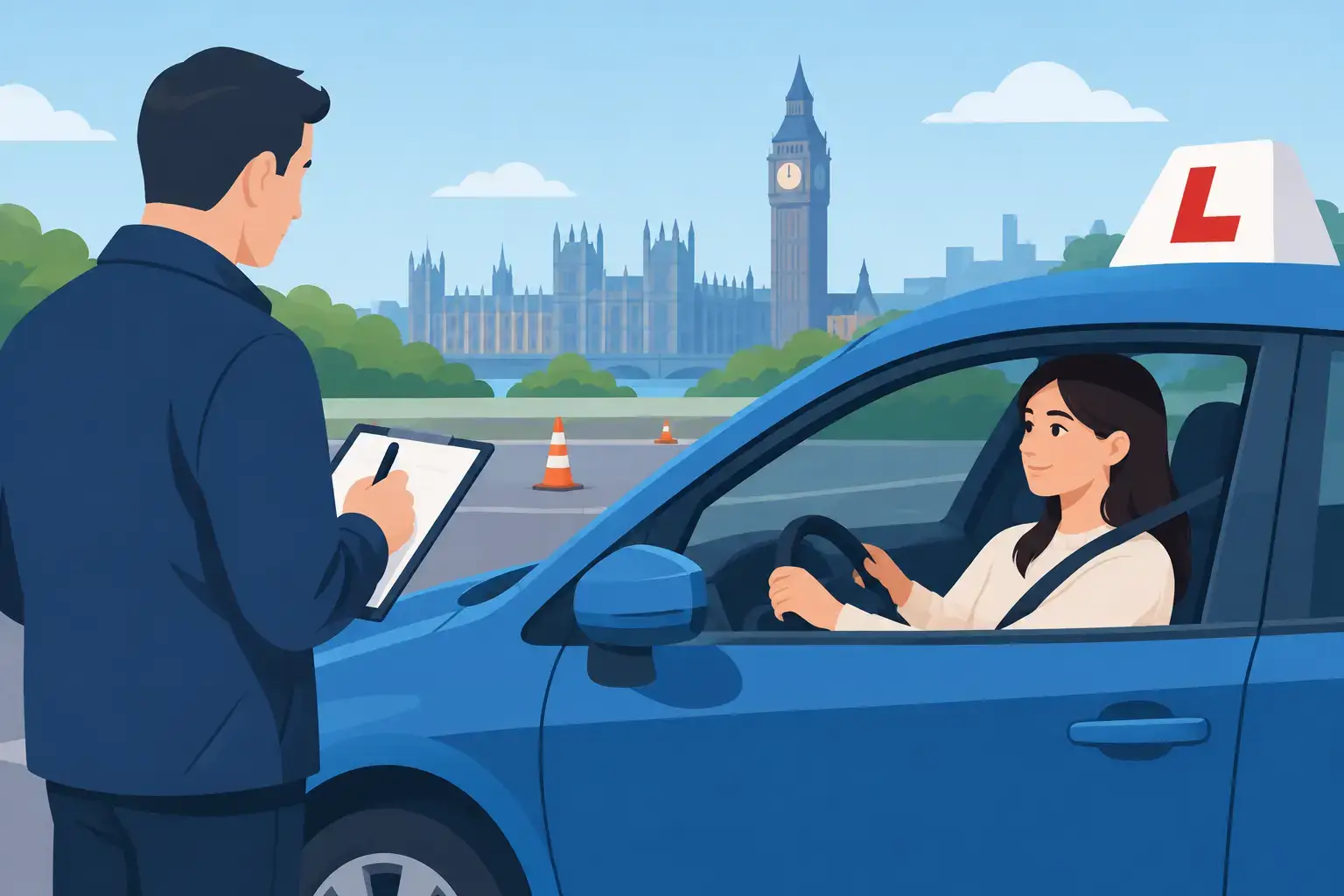
Learn how to prepare for your driving test with a clear UK practice plan, mock-test advice and calm last-minute checks before your test day.
Your driving test is not the day to prove you can drive perfectly. It is the day to show that you can make safe, independent decisions in normal road conditions. Knowing how to prepare for a driving test means building that confidence well before your examiner joins you in the car.
For some learners, the main challenge is getting enough consistent practice. For others, it is nerves, a recent failed test or uncertainty around manoeuvres and independent driving. A clear plan, tailored to your experience, can turn test preparation into a manageable goal.
Start with an honest test-readiness check
Before you book more lessons or search for a practical test, establish where you are now. Being able to drive around familiar roads is a good starting point, but test-ready driving requires more. You need to deal safely with new routes, busy roundabouts, changing speed limits and unexpected decisions without relying on prompts from your instructor.
A good instructor will assess your control of the car, awareness of other road users, judgement at junctions and ability to follow directions independently. They should also identify patterns, rather than focusing only on isolated mistakes. For example, stalling once does not mean you are not ready. Regularly rushing at roundabouts, missing mirror checks or hesitating until other drivers must react are areas that need focused work.
If you have already had lessons, a short assessment lesson can help you choose the right next step. You may only need a few hours to sharpen your test skills, or you may benefit from a more structured course if you have had a long break from driving.
Build practice around the skills that matter
The practical test assesses safe driving throughout the journey, not just your ability to complete a manoeuvre when asked. Use each lesson to improve the decisions that happen every few seconds: observation, speed choice, road position and planning ahead.
Make your observations visible
Examiners need to see that you are checking mirrors and looking properly at junctions, crossings and hazards. This does not mean exaggerated head movements. It means timely, purposeful checks before you change speed, direction or road position.
Practise your routines until they feel natural. Before moving off, changing lanes, turning, pulling up or reversing, check the relevant mirrors and blind spots. At junctions, look early enough to judge the gap rather than stopping out of uncertainty when it is safe to proceed.
Practise the roads you find difficult
Avoid using every lesson to repeat the same comfortable route. Ask to practise the situations that make you tense, whether that is multilane roundabouts, country lanes, dual carriageways, hill starts or meeting oncoming traffic on narrow roads.
You do not need to memorise test routes. Routes can change, and the examiner is assessing your driving rather than your local knowledge. However, practising a varied mix of local roads helps you meet common situations with a calmer, more organised approach.
If you are learning in an automatic, focus on the same observation and planning skills. Automatic driving removes clutch control, but it does not remove the need for safe speed, good positioning and sound judgement. Choose the transmission that suits your needs and practise consistently in the type of car you intend to use for the test.
Get comfortable with manoeuvres and pulling up safely
You may be asked to complete one reversing manoeuvre, such as bay parking, parallel parking or pulling up on the right and reversing. You could also be asked to pull up and move away safely during the drive.
The key is not finishing quickly. Keep the car under control, observe throughout and correct your position if necessary. A careful adjustment is usually better than continuing with a poor approach. Your instructor can show you reference points, but make sure you understand what you are looking for and why, rather than relying on a fixed routine that only works in one car park.
Take mock tests seriously
A mock test is one of the most useful ways to prepare for your driving test because it reveals how you drive when you cannot rely on coaching. Ask your instructor to run it as realistically as possible, with independent driving, a manoeuvre, a show me tell me question and feedback at the end.
The result is less important than what it tells you. A mock test can expose habits that do not show up during normal lessons, such as asking for reassurance at every junction, losing concentration after a small error or driving too cautiously when the road is clear.
Afterwards, turn the feedback into a short plan. Do not try to fix everything at once. If your weakest area is approach speed at junctions, spend time on that skill across different roads. If your issue is test nerves, repeat mock-test conditions until the format feels familiar.
Prepare for independent driving
During the practical test, you will drive independently for around 20 minutes. The examiner may ask you to follow sat nav directions or traffic signs. You are not being tested on your ability to use technology or remember every instruction perfectly. You are being assessed on whether you remain safe while following the route.
If you miss a turn, do not panic or attempt a late manoeuvre. Continue safely and let the examiner direct you. Taking a wrong route is not normally a fault. Sudden steering, harsh braking or cutting across lanes to recover a missed turn can be.
Practise following sat nav directions with your instructor before test day. Learn to listen ahead, check signs early and keep your attention on the road rather than the screen. You should also be ready to follow signs independently if the sat nav is not used.
Know the questions and vehicle checks
At the start of the test, you will be asked one tell me question before driving. During the drive, you will be asked one show me question when it is safe to do so. These cover basic vehicle safety, such as checking lights, demisting the windscreen or using the rear demister.
Learn the answers in the car you will be using. The location of controls can vary, and feeling around for a button while moving can distract you. Your instructor should help you practise these questions as part of your lessons, not leave them until the final hour.
Also make sure the vehicle is suitable for the test. It must be roadworthy, insured for the test and display L plates. Check the fuel level, tyres and lights in advance. If you are using an instructor's car, confirm collection arrangements and allow enough time to settle before the appointment.
Manage nerves without trying to eliminate them
Most learners feel nervous before a driving test. That is normal, and a little adrenaline can help you stay alert. The aim is not to feel nothing. It is to prevent nerves from making your decisions rushed or narrow your focus.
In the days before the test, avoid cramming in stressful lessons just to feel busy. A focused lesson or mock test can be useful, but exhaustion rarely helps. Get a proper night's sleep, eat something light beforehand and arrive early enough that you are not worrying about parking or traffic.
On the test, treat each situation separately. If you make a minor error, do not assume you have failed. Many people pass with driving faults. Take a breath at the next safe opportunity, refocus on the road ahead and continue showing the examiner the standard of driving you have practised.
Choose the right amount of support
The quickest route to a licence is not always the fewest possible hours. A learner with recent experience who needs to retake after a test may need a short, focused course. A returning driver might need more time to rebuild confidence, while a complete beginner will need a structured programme that develops skills in the right order.
Intensive Lessons can match learners with local Approved Driving Instructors for manual or automatic tuition, with course lengths tailored to your starting point. A managed plan can be particularly helpful if you need to organise lessons around work, family commitments or an upcoming test date.
Your final lessons should reinforce what you can already do while targeting the few areas that still need attention. By test day, you should not be trying to remember dozens of separate instructions. You should be driving with calm observation, safe judgement and a clear plan for the road ahead. Keep that focus, give yourself time to prepare properly and get driving.
Last Updated: 21/11/2026