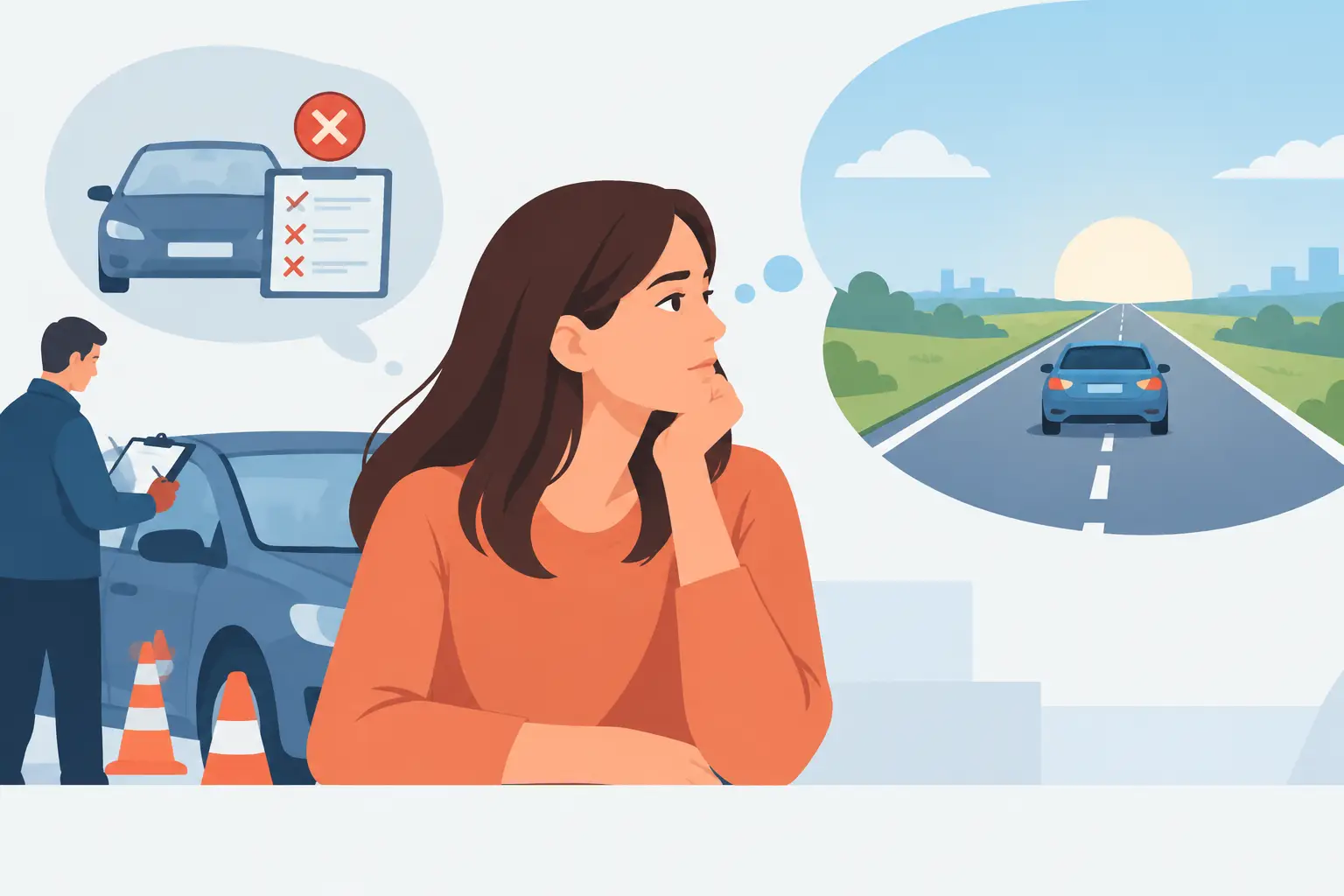
Failed your practical test? Find out how driving lessons after a failed test can target faults, rebuild confidence and prepare you for a focused retake.
Failing your practical test can feel frustrating, especially when you were close to passing. But a test result is not a verdict on your ability to become a safe driver. Driving lessons after a failed test give you a clear opportunity to understand what happened, improve the areas that cost you marks and return to your next test feeling properly prepared.
For many learners, the right next step is not starting again. It is focused tuition with an approved instructor who can turn your examiner’s feedback into a practical plan. Whether you picked up a few driving faults, made one serious mistake or let nerves take over, a tailored retest course can help you make measurable progress.
Start with your driving test feedback
Your driving test report is the best place to begin. It shows the driving faults and serious or dangerous faults recorded by the examiner, giving your instructor a useful starting point for your first lesson after the test.
A few minor faults in one area may suggest a habit that needs tightening up. For example, repeated faults for observations, positioning or use of mirrors can often be improved through structured practice. A serious fault may need a more detailed review, but it does not always mean your overall driving is poor. One missed observation at a busy roundabout, an incorrect response to traffic lights or hesitation that affects another road user can change the result in a single moment.
Bring your test report to your instructor and be honest about how the test felt. Were you confident until a particular junction? Did you rush because you thought you were running out of time? Did an unfamiliar road or manoeuvre unsettle you? Understanding the situation, rather than simply memorising faults, is how you build better judgement for the next attempt.
How many lessons do you need after failing a test?
The answer depends on why you did not pass and how consistently you were driving before the test. Some learners are ready for a short refresher of five to 10 hours. Others benefit from 15 hours or more, particularly if several areas need work or they have lost confidence since the test.
A focused assessment lesson is a sensible first move. Your instructor can watch how you drive in normal conditions, identify whether the test result reflects an isolated mistake or a wider gap in your skills, and recommend a realistic number of hours. This avoids paying for more lessons than you need while ensuring you do not book another test before you are ready.
If you failed because of nerves rather than a clear skill gap, your lesson plan may focus on mock tests, independent driving and managing pressure. If the report shows issues with roundabouts, lane discipline or meeting traffic, your lessons should include repeated practice in those situations until your decisions become calmer and more natural.
Driving lessons after a failed test should be targeted
General driving practice is useful, but retest preparation works best when it is specific. Your instructor should revisit the fault areas first, then check the rest of your driving so that new bad habits have not developed.
Turn faults into repeatable routines
Many test faults happen because a learner knows what to do but does not do it consistently under pressure. The goal is not to perform a checklist for the examiner. It is to make safe routines part of every drive.
For observations, this could mean practising the correct mirror checks before changing speed, direction or position. For junctions, it may mean improving your approach speed, selecting a suitable gear and judging gaps without being rushed by traffic behind you. For manoeuvres, it is about controlled observation and accuracy rather than completing the exercise as quickly as possible.
Your instructor can break each routine down, demonstrate where needed and give you enough repetition to make the improvement stick. Then they can put you back into busier, less predictable situations where those habits really matter.
Practise the conditions that caught you out
If your test was in a busy town centre, practise complex junctions, pedestrians, buses, cyclists and changing lanes. If it was around rural roads, work on meeting oncoming traffic, judging bends and choosing a safe speed. If dual carriageways were difficult, build confidence joining, leaving and changing lanes safely.
You do not need to memorise test routes. Routes can change, and safe driving is about reading what is in front of you. However, becoming comfortable with the type of roads around your test centre can reduce the surprise factor and help you use your attention where it is needed.
Should you take an intensive retest course?
An intensive course can be a practical option after a failed test, particularly when you are already near test standard. Instead of fitting one lesson around school, work or family responsibilities each week, you can concentrate your tuition into a shorter period and deal with weaknesses while the learning is fresh.
This approach suits learners who want to retake promptly, have a clear goal and can commit time to regular lessons. It can also help if confidence has dipped, as you have less time between sessions to overthink the previous test.
It is not the best choice for everyone. If you need time to process feedback, can only manage short sessions or have not driven for several months, a more gradual course may be better. The right course is the one tailored to your needs, current experience and availability, not simply the fastest option.
Intensive Lessons can arrange manual or automatic tuition with a local approved instructor, with course lengths available for learners who need a short retest-focused block as well as those requiring more substantial support. You can choose a collection location that works for you and begin with a deposit, making it easier to organise your next steps.
Build confidence without becoming complacent
It is common to feel more nervous before a second test. You may worry that you will make the same mistake again, or feel pressure from friends, family or the cost of retaking. The answer is not to pretend nerves do not exist. It is to prepare for them.
Mock tests are valuable because they reveal how you drive when somebody is watching and giving minimal help. Ask your instructor to run a realistic mock test, then talk through the result afterwards. A fault during a mock is useful information, not a failure. It gives you the chance to correct it before the real test.
At the same time, avoid assuming that one previous test makes the next one automatic. Keep applying the same care to mirrors, speed, observations and planning. A pass comes from safe, consistent driving across the whole test, not from one perfect manoeuvre or an easy route.
When should you book another driving test?
Book when your instructor believes you are consistently driving to test standard, not simply because the next available date is soon. Most learners need a little time after a failed attempt to practise the relevant skills and complete at least one mock test.
Your test appointment should also work with your lesson plan. Ideally, you will have enough tuition before the test to address faults, plus a lesson close to the date to keep everything fresh. If you are looking for a suitable test date, organised support with test searches can save time and help you plan your course around availability.
You should not need to wait until you feel completely free of nerves. Very few people do. You should, however, feel able to make safe decisions independently, recover calmly from small errors and continue driving without letting one moment affect the rest of the test.
Make the next lesson count
Before your first retest lesson, keep your test report, think about the exact moments that felt difficult and be ready to discuss them openly. A good instructor will not judge the result. They will assess where you are now, set clear priorities and help you see progress from lesson to lesson.
A failed test is disappointing, but it can make you a more aware and capable driver when you respond with the right preparation. Take the feedback seriously, choose lessons that match what you need and give yourself the focused practice to get driving with confidence.
Last Updated: 15/11/2026