Are automatic driving lessons easier? See what changes behind the wheel, who they suit and how to choose the right UK course with confidence before booking.
A busy roundabout, a hill start and an impatient queue behind you can make learning to drive feel like a lot to manage at once. So, are automatic driving lessons easier? For many learners, yes: removing the clutch and gear changes frees up attention for the road. But an automatic is not a shortcut around safe driving. You will still need to build judgement, awareness and control before you are ready for test day.
The better question is whether automatic lessons are easier for you. Your confidence, previous experience, available time and the type of licence you want all matter. Choosing the right course from the start can make your learning feel more focused and help you make measurable progress.
Why automatic driving lessons can feel easier
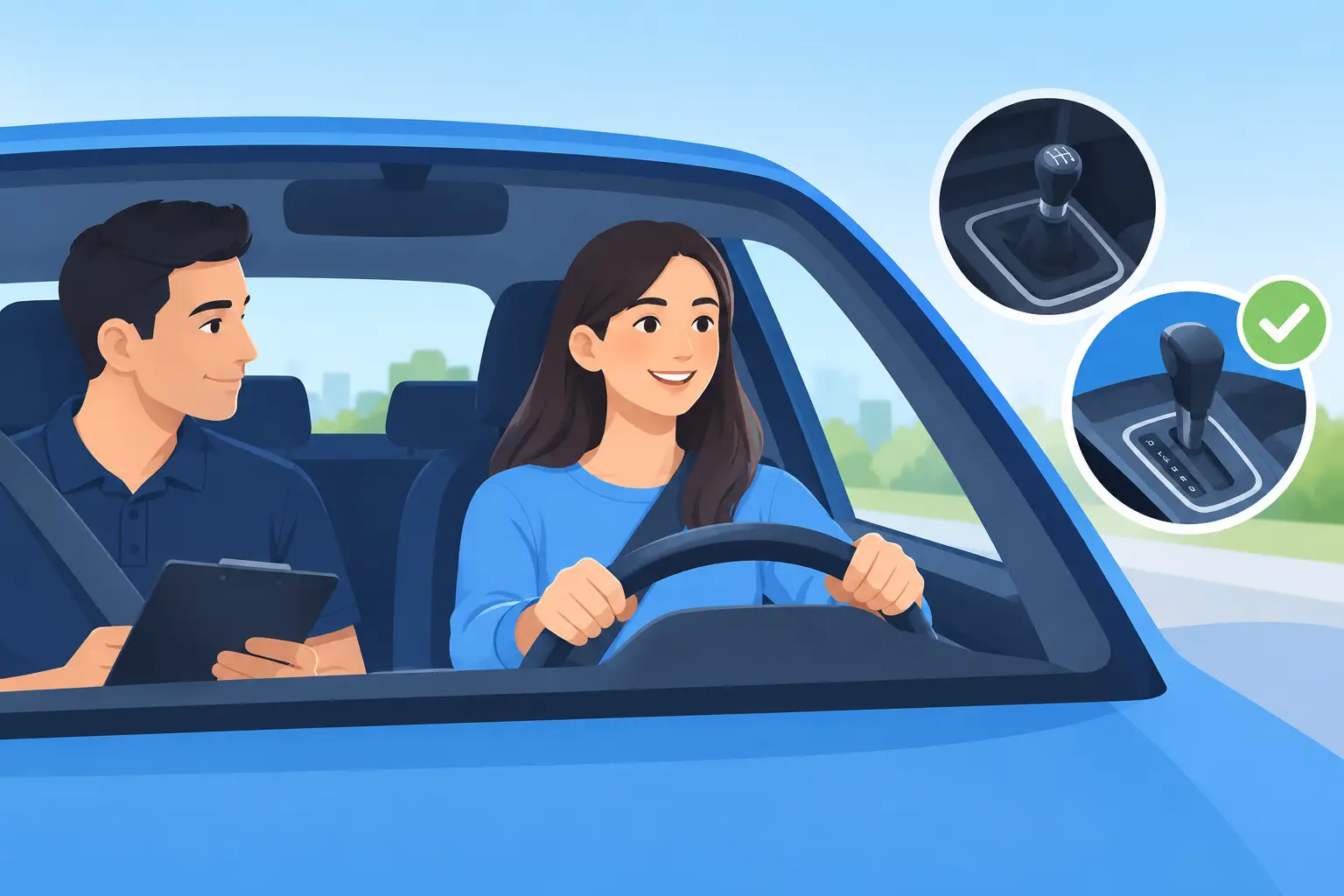
In an automatic car, there is no clutch pedal and no need to select gears while moving. You use your right foot for the accelerator and brake, then let the car manage its gears. This means there is less coordination to think about when pulling away, slowing down in traffic or approaching a junction.
For a complete beginner, that can make the first few lessons feel calmer. Instead of dividing your attention between clutch control, finding the bite and watching what is happening around you, you can concentrate earlier on steering accurately, checking mirrors and planning ahead.
Automatic lessons can be especially helpful in stop-start traffic. You will not need to repeatedly work the clutch in queues or worry about stalling when moving off on a hill. That reduction in pressure can be valuable for nervous learners, returning drivers and anyone whose previous manual lessons felt overwhelming.
More mental space for road awareness
Driving well is about far more than operating the car. You need to spot developing hazards, read road signs, position correctly, judge gaps and react safely to other road users. An automatic car may give you more mental space to practise those skills sooner.
This does not mean every learner will find automatic tuition instantly easy. Some people need time to adjust to using only one foot, applying smooth braking or trusting the car to change gear. Yet many find the process more straightforward once those early habits are in place.
Automatic lessons still require the same driving skills
The driving test is not easier simply because you take it in an automatic. The examiner is still assessing whether you can drive safely and independently. You will need to meet the same standards for observation, judgement, speed, steering, manoeuvres and following directions.
You will still practise pulling up safely, moving off under control, parking exercises and responding to real road conditions. At a busy multi-lane roundabout, for example, the car may handle the gears, but you must choose the correct lane, check mirrors and blind spots, assess approaching traffic and take a safe opportunity to proceed.
That is why good automatic tuition remains structured. Your instructor should build your skills in manageable stages, then bring them together as your confidence grows. A learner who can move the car but does not look ahead or plan properly is not ready for test standard.
The test result and your licence
If you pass your practical driving test in an automatic car, your full licence will allow you to drive automatic vehicles only. You can later take another practical test in a manual car if you want a manual licence.
If you pass in a manual, you can drive both manual and automatic cars. This is the key trade-off to consider. A manual licence gives you wider choice, particularly if you expect to borrow different cars or need to drive a manual vehicle for work.
However, automatic cars are increasingly common, including electric vehicles. If an automatic meets your likely needs, choosing one can be a practical decision rather than a compromise. The right answer depends on the cars you expect to drive, not just what friends or family members have chosen.
Who may benefit most from automatic tuition?
Automatic driving lessons are often a strong fit for learners who want to focus on becoming safe, confident drivers without the additional challenge of clutch and gear control. They can work particularly well if you have a clear reason to get driving within a shorter timeframe.
A returning learner may have already spent time trying to master a manual car and lost confidence after a break. Switching to automatic can help them restart with a simpler set of controls. Likewise, someone preparing for a new job, caring responsibilities or a move to an area with limited public transport may value a focused route to practical driving independence.
Learners with anxiety can also find automatic lessons less demanding at first, particularly in heavy traffic or when approaching hill starts. That said, the best support is not simply the type of gearbox. It is an instructor who adapts the pace of each lesson, explains what is happening clearly and gives you time to practise without feeling rushed.
Manual may still suit you if you enjoy the technical side of driving, have already made progress with clutch control or want the broadest possible vehicle choice. There is no prize for choosing the harder option, but there is value in choosing the licence that supports your plans.
Are automatic driving lessons easier in an intensive course?
They can be. Intensive driving courses give you regular, concentrated practice rather than leaving long gaps between individual lessons. That consistency can help you remember routines, improve faster and identify areas that need more work.
In an automatic, the early lessons may move more quickly into road positioning, junctions and independent driving because there are fewer vehicle controls to learn. For some learners, this makes an intensive course feel efficient and encouraging.
But intensive learning is not about rushing towards a test date. It works best when the course length matches your starting point. A complete beginner needs enough time to establish safe habits, while a learner who has previously driven or recently failed a test may need a shorter, targeted course.
Before booking, be honest about your experience. Have you never driven before? Can you already handle quiet roads but struggle with roundabouts? Are you test-ready but need a few refresher hours? A proper assessment helps match you to suitable tuition hours and avoids paying for a course that is too short for your needs.
How to decide between manual and automatic
Start with your end goal. If you need to drive an automatic family car, plan to buy an electric vehicle or want to build confidence as efficiently as possible, automatic lessons may be the sensible route. If you need flexibility to drive manual vehicles, or you are comfortable with gear changes, manual tuition may be worth the extra learning stage.
Think about your local driving conditions too. Learners in congested towns and cities often appreciate the simplicity of an automatic in frequent traffic. Those learning in quieter areas may find either option equally manageable, although the licence restriction remains the same wherever you live.
It is also worth considering availability. Instructor availability, the car type offered in your area and your preferred lesson times can affect how soon you can begin. A managed provider such as Intensive Lessons can help organise local automatic tuition around your experience level, chosen collection location and course requirements.
Make the choice that gets you driving confidently
Automatic lessons can remove a major source of early stress, but they do not remove the need to become a thoughtful, safe driver. The most useful choice is the one that lets you learn consistently, stay confident and work towards the type of driving you will actually do.
Choose a course tailored to your starting point, give yourself enough hours to develop properly and treat every lesson as progress towards independence. The gearbox matters, but your confidence and road awareness are what will carry you forward after you pass.
Last Updated: 10/11/2026